

Cloud-Clone Active Proteins: Empowering High-Level Research Through Verified Functional Activity Data
News originally published by
EIN Presswire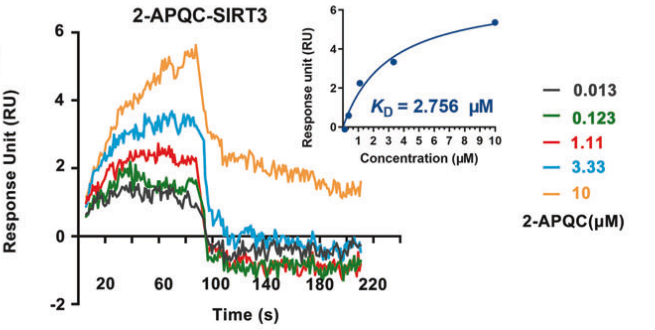
A case study illustrating how well-characterized SIRT3 protein supports breakthrough heart-failure drug-discovery research
HUSTON, TX, UNITED STATES, November 23, 2026 /EINPresswire.com/ -- High-quality, functionally validated protein reagents constitute a cornerstone of modern biomedical discovery. Reliable protein performance directly shapes experimental reproducibility and the credibility of research outputs. This press release presents a real-world research case from Signal Transduction and Targeted Therapy. It demonstrates how Cloud-Clone’s SIRT3 active protein delivers critical experimental evidence for heart-failure therapeutic-target investigation, and highlights the value of verifiable biological-activity data for global life-science communities.
Key Value of Active Proteins Reflected in Heart-Failure Research
Heart failure represents a highly prevalent severe cardiovascular disorder worldwide. Myocardial hypertrophy, myocardial fibrosis and impaired mitochondrial homeostasis are core pathological drivers of disease progression. SIRT3, a NAD⁺-dependent mitochondrial deacetylase, modulates multiple signaling pathways governing oxidative stress, mitochondrial energy metabolism and cell death. It serves as a highly promising target for cardiovascular protection and anti-heart-failure drug discovery.
In 2024, researchers from West China Hospital, Sichuan University published landmark heart-failure-therapy research in the authoritative international journal Signal Transduction and Targeted Therapy (Impact Factor 81). Using structure-based drug design, the team identified 2-APQC, a novel small-molecule selective activator targeting SIRT3. The compound acts in a SIRT3-dependent manner to inhibit the mTOR-p70S6K, JNK and TGF-β/Smad3 signaling cascades. It also regulates the SIRT3-PYCR1 mitochondrial proline-metabolism axis and ameliorates isoproterenol-induced myocardial hypertrophy and fibrosis. These findings open new directions for innovative anti-heart-failure drug development.
Within this study, Cloud-Clone SIRT3 active protein (Catalog No. APE913Ra01) was deployed in surface plasmon resonance (SPR) assays to characterize direct molecular binding between 2-APQC and SIRT3. SPR measurements documented robust interaction between 2-APQC and SIRT3, yielding an equilibrium dissociation constant (Kd) of 2.756 µM. This key dataset laid a solid foundation for subsequent molecular docking and mechanistic exploration.
What prompted a high-impact study with an Impact Factor of 81 to select Cloud-Clone active protein? The core consideration lies in one essential attribute: the practical value of an active protein hinges on genuine, verifiable biological activity.
SIRT3: A Mitochondrial Protector
SIRT3 is a NAD⁺-dependent deacetylase localized within mitochondria. It plays essential roles in regulating oxidative stress, catabolic pathways and ATP generation. Cumulative research demonstrates that SIRT3 mediates pathological processes including cardiac fibrosis and heart failure via deacetylation-dependent regulatory mechanisms.
Mechanistically, SIRT3 deacetylates glycogen synthase kinase-3β (GSK-3β), suppressing TGF-β/Smad3-dependent profibrotic protein expression and mitigating cardiac fibrosis while preserving cardiac function. SIRT3 also deacetylates FOXO3, which in turn activates manganese superoxide dismutase 2 (MnSOD2) and catalase to restrain reactive-oxygen-species (ROS) accumulation.
For these reasons, pharmacological activation of SIRT3 is regarded as a promising therapeutic strategy against heart failure. However, existing SIRT3 activators such as honokiol and isoliquiritigenin A exhibit limited target selectivity. Discovering new selective SIRT3 activators remains an urgent unmet need for heart-failure-therapy research.
Cloud-Clone Active Protein: An Essential Research Tool for the Study
Cloud-Clone SIRT3 active protein (Catalog No. APE913Ra01) performed a critical experimental function throughout this research project.
SPR Assay for Direct-Binding Verification Investigators conducted SPR measurements using a Biacore X100 instrument. CM5 sensor chip flow-cells 1 and 2 were activated with EDC/NHS. SIRT3 protein (Cloud-Clone, APE913Ra01) was diluted in pH 5.0 acetate buffer and immobilized on flow-cell 2, achieving a protein coupling mass of 10 µg with a coupling response of 5607.7 RU. Remaining reactive sites were subsequently blocked with ethanolamine.
Serial dilutions of 2-APQC at five concentrations (10 µM, 3.33 µM, 1.11 µM, 0.123 µM, 0.013 µM) were applied for multi-cycle kinetic analysis. SPR results confirmed measurable direct interaction between 2-APQC and SIRT3, returning a Kd value of 2.756 µM.
Figure 1 SPR validation using Cloud-Clone SIRT3 active protein: Direct binding between 2-APQC and SIRT3 with Kd = 2.756 µM. Data source: Signal Transduction and Targeted Therapy (2024).
A lower Kd value corresponds to stronger binding affinity. The Kd of 2.756 µM indicates moderate-affinity direct interaction between 2-APQC and SIRT3 and furnishes key experimental evidence supporting downstream molecular docking and mechanistic investigation.
Molecular Docking to Characterize Binding Modes Molecular-docking simulations revealed that the binding pocket occupied by 2-APQC largely overlaps with SIRT3 Pocket L. 2-APQC forms hydrogen bonds with residue PHE157 and hydrophobic contacts with PRO176, PHE294 and GLU323. These computational observations align with SPR experimental outputs and collectively support that 2-APQC represents a candidate selective SIRT3 activator.
CETSA Assays for Intracellular-Binding Confirmation Cellular thermal-shift assays (CETSA) were implemented to verify intracellular binding and activation of SIRT3 by 2-APQC. Treatment with 2-APQC increased the thermal stability of endogenous SIRT3 within H9c2 cardiomyocytes, confirming intracellular target engagement. No obvious shift in thermal stability was observed for SIRT1, SIRT2, SIRT4, SIRT5, SIRT6 or SIRT7, demonstrating the selectivity of 2-APQC toward SIRT3.
Deacetylation-Activity Assays for Functional Validation Researchers further assessed how 2-APQC modulates SIRT3 deacetylase activity. In the presence of 2-APQC, acetylation levels of AcK68-MnSOD2 and AcK122-MnSOD2 decreased markedly without notable alteration of total SIRT3 protein abundance. These data indicate that 2-APQC enhances SIRT3 deacetylase activity in a time-dependent manner independent of changes in SIRT3 expression level.
From Activity Validation to Mechanism Elucidation: Full-Experimental-Pipeline Support From Cloud-Clone Reagents
Beyond supporting SPR binding assays, Cloud-Clone SIRT3 active protein provided foundational material resources enabling subsequent mechanistic studies.
In vitro cellular models of myocardial hypertrophy and fibrosis were established to characterize cardioprotective effects triggered by 2-APQC. Immunofluorescence imaging demonstrated that 2-APQC alleviated isoproterenol-provoked cardiomyocyte hypertrophy. Isoproterenol elevated expression of profibrotic markers α-SMA and collagen I; 2-APQC treatment reduced the abundance of these fibrosis-associated proteins.
For in-vivo assessment, an isoproterenol-induced rat heart-failure model was constructed. Echocardiographic readouts showed that 2-APQC, metoprolol and honokiol each improved cardiac performance. Isoproterenol challenge depressed ejection fraction (EF) and fractional shortening (FS), while elevating left-ventricular end-systolic diameter (LVESD) and brain natriuretic peptide (BNP). Both 2-APQC and positive-control compounds rescued isoproterenol-driven systolic cardiac dysfunction.
Notably, the protective therapeutic effects of 2-APQC vanished in SIRT3-knockout mice, confirming that its heart-failure-relieving activity is strictly SIRT3-dependent.
Dual Assurance of Quality and Functional Data Demonstrated by Cloud-Clone Active Protein
This high-impact publication with an Impact Factor of 81 validates the reliability and consistency of Cloud-Clone active protein products across multiple dimensions:
1.Product purity and functional coupling: Successful SPR performance and a high coupling response of 5607.7 RU reflect adequate purity and favorable coupling properties of Cloud-Clone SIRT3 active protein.
2.Batch-to-batch consistency: Reproducible Kd measurements acquired across parallel SPR test sets illustrate reliable batch-to-batch performance.
3.Functional reliability: The SIRT3 reagent contributed experimental evidence for SPR binding tests, CETSA interpretation and deacetylation-activity detection, confirming genuine biological functionality.
4.Validation within high-level research workflows: Deployment within a high-impact study conducted by a well-known academic institution such as West China Hospital serves as real-world validation of product performance.
Cloud-Clone Active Proteins: A Trusted Partner for Global Research
Cloud-Clone Corp. is situated within the Wuhan Export Processing Zone. The organization holds ISO 9001 and ISO 13485 quality-management-system certifications. It maintains an on-site animal-research facility holding valid permits for laboratory-animal breeding and experimentation. Drawing on more than ten years of technical expertise, Cloud-Clone independently develops and manufactures research-grade proteins, antibodies, matched antibody pairs and assay kits, alongside diagnostic raw materials and industrial-scale biomolecular products.
Cloud-Clone offers approximately 18 000 protein products, 27 000 antibody items and 10 000 detection kits, including over 1 300 functionally validated active-protein reagents. Its active-protein portfolio covers numerous species: human, mouse, rat, pig, rabbit, dog, chicken, bovine, goat and horse. Product specifications range from microgram-scale laboratory aliquots to gram-scale bulk material to satisfy requirements for basic research, drug screening and in-vivo animal studies.
To date, reagents supplied by Cloud-Clone have been cited in more than 42 000 SCI-indexed publications globally, with hundreds of these articles appearing in high-profile journals such as Nature, Science and Cell. These citations reflect consistent product performance when deployed in sophisticated research settings.
The intrinsic value of active-protein reagents resides in verifiable biological activity. The successful application of Cloud-Clone SIRT3 active protein within this high-impact heart-failure research exemplifies this core principle. From precise SPR binding measurements, through intracellular-target-engagement CETSA assays, to deacetylation-functional characterization, Cloud-Clone active proteins deliver robust experimental foundations for advanced biomedical investigations.
Selecting Cloud-Clone active-protein reagents means accessing documented functional-activity datasets, stable batch-to-batch quality and responsive technical support for global research teams. As target-based drug discovery continues to advance, functionally verified protein resources will remain indispensable for unlocking new biological insights and therapeutic opportunities.
SuKi Duan
CLOUD-CLONE CORP.WUHAN
cro@cloud-clone.com
Visit us on social media:
LinkedIn
Instagram
TikTok
X
Legal Disclaimer:
EIN Presswire provides this news content "as is" without warranty of any kind. We do not accept any responsibility or liability for the accuracy, content, images, videos, licenses, completeness, legality, or reliability of the information contained in this article. If you have any complaints or copyright issues related to this article, kindly contact the author above.
