
Research rooted out cause of disease decline
Dr. Cook’s legacy expands well beyond his work on take-all, beyond his dissertation on Fusarium, beyond his work revealing the genetic potential of wheat.
Cook was awarded the Guggenheim Fellowship in 1973, and in 1993, Cook became an inducted member of the National Academy of Sciences. In 1998, the Washington Grain Commission endowed the R. James Cook Endowed Chair in Wheat Research in his honor, most recently held by Dr. Ian Burke.
Cook Agronomy Farm was named in his honor in 2000.
In 2011, Cook was awarded the highly prestigious Wolf Prize in Agriculture for “seminal discoveries in plant pathology and soil microbiology that impact crop productivity and disease management.” He is one of 41 Americans to have ever been awarded a Wolf Prize.
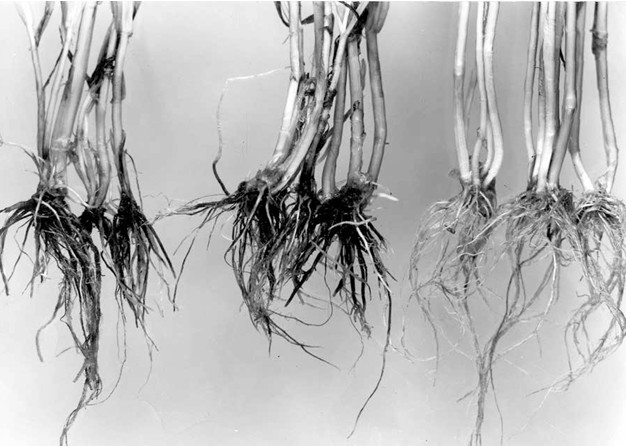
Among Cook’s nearly innumerable achievements sit over 200 peer-reviewed articles, two books, several U.S. Department of Agriculture awards, thousands of hours spent mentoring, and thousands more spent researching in the field.
His work was tireless; his accomplishments vast. But perhaps the most impactful part of Dr. Cook’s incomparable legacy cannot be recognized by an award or a hall of fame induction.
Dr. Cook is widely known among peers and growers alike for being someone thoughtful in his approach and unfailingly generous with his information. Cook’s scientific achievements changed the way researchers understand wheat diseases and soil biology. Yet those who knew him best often remember something less tangible: his willingness to share what he learned.
Growers trusted him because he translated science into practical solutions. Students sought him out because he made time for their questions. Colleagues remember a scientist who advanced his field while lifting others alongside him.
Beverly Cook noted that growers “always came out for Jim (at field days),” because Cook had a particular knack for sharing his research in applicable ways that directly benefited the grower he was talking to.
Yes, Dr. Cook’s scientific advancements opened doors for future researchers. His research fundamentally changed the wheat world in more ways than one, and standing alongside every one of his accomplishments is a story about a fellow researcher he went well out of his way to help, a grower whose questions he happily answered, a student he lent advice to.
“I was an undergraduate student at WSU in the early 1980s, where I had the opportunity to interact with Dr. Cook as an agronomy student,” said Snapp. “He was always generous with his time and would talk with me about his research on topics like harnessing biology to tackle big challenges. His work on discoveries that protected wheat health inspired me to investigate seed coatings to protect against disease. I interviewed him about this in 1982, which led to an article that was highlighted by the American Society of Agronomy. I started to dream about becoming a scientist, which he encouraged me to pursue. His systems perspective has informed my entire research career, where he developed actionable management strategies based on the best science that armed farmers with knowledge to address real-world problems.”
Today, Cook’s legacy lives not only in research papers, awards, and institutions that bear his name, but also in the fields that continue to thrive because of his discoveries and in the researchers, growers, and students who carry his curiosity forward. Like the wheat stretching across the Palouse, the impact of his life’s work continues to grow.
Legal Disclaimer:
EIN Presswire provides this news content "as is" without warranty of any kind. We do not accept any responsibility or liability for the accuracy, content, images, videos, licenses, completeness, legality, or reliability of the information contained in this article. If you have any complaints or copyright issues related to this article, kindly contact the author above.
