

The latest news on education
Provided by AGP
Capital Medical University Study Spots Early Signal to Protect Vision During Brain Tumor Surgery
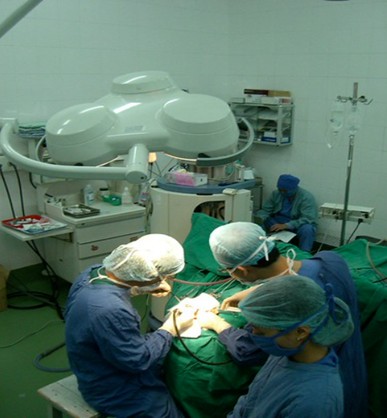
Surgical removal of recurrent craniopharyngiomas is particularly challenging due to their location near the optic nerves and optic chiasm, which are critical for vision. Even minor injury to these structures can result in lasting visual impairment. Intrao
A new study shows how intraoperative signal changes can predict vision loss, offering earlier warnings in recurrent craniopharyngioma surgery
BEIJING, CHINA, May 12, 2026 /EINPresswire.com/ -- Craniopharyngiomas are rare brain tumors that develop in the sellar region, a central area at the base of the brain that houses the pituitary gland. This region lies close to the optic nerves and optic chiasm, which are responsible for vision. Because of this proximity, surgical removal can be particularly challenging. Even minor injury to these visual pathways may lead to lasting impairment, making the preservation of vision a key concern during surgery. Recurrent craniopharyngiomas present an even greater challenge. These tumors often adhere more tightly to surrounding tissues, increasing the risk of surgical complications and postoperative visual dysfunction. Despite advances in surgical techniques, protecting vision in such cases remains difficult.In a recent study published on February 27, 2026, in Volume 12, article number 6 of the Chinese Neurosurgical Journal, researchers from Capital Medical University, China, investigated whether intraoperative monitoring of visual signals could help predict and prevent vision loss during surgery for recurrent craniopharyngiomas. The study was co-led by Dr. Xing Fan and Professor Hui Qiao from the Department of Neurophysiology, Beijing Neurosurgical Institute, Capital Medical University. Their work focuses on refining real-time monitoring strategies to improve surgical safety in these high-risk cases.
“Intraoperative visual evoked potential (VEP) monitoring provides real-time insight into the functional integrity of the visual pathway,” says Prof. Qiao. “It allows surgeons to detect potential injury early and respond before it becomes irreversible.”
The VEP technique used in the study tracks how visual signals travel from the eyes to the brain. During surgery, controlled light stimuli are delivered to the eyes, and the brain’s electrical responses are recorded. If the signal weakens, it may indicate that the visual pathway is under stress. This gives surgeons an opportunity to adjust their approach in real time. To evaluate its clinical value, the researchers analyzed 42 patients with recurrent craniopharyngiomas who underwent tumor removal using the extended endonasal endoscopic approach. This minimally invasive technique enables surgeons to access the tumor via the nasal cavity. VEP signals were continuously recorded throughout the procedure, and the team analyzed how changes in these signals related to visual outcomes post-surgery.
The results showed a clear association between signal changes and postoperative vision. Patients who developed visual dysfunction had significantly greater reductions in VEP signal amplitude than those whose vision remained stable. Among the different signal components analyzed, one measure, known as N75-P100, emerged as the most reliable indicator. “Our findings show that changes in the N75-P100 amplitude are strongly associated with postoperative visual outcomes,” explains Dr. Fan. “This provides a focused and clinically useful parameter for intraoperative monitoring.”
Further analysis revealed a practical threshold. A reduction of 36.59% in the N75-P100 signal was closely linked to an increased risk of vision loss. Based on this, the researchers propose that a one-third drop in signal amplitude can serve as an early warning during surgery. Interestingly, another signal component, P100-N145, did not remain a significant predictor when both measures were analyzed together. This suggests that focusing on the most reliable signal may improve the effectiveness of intraoperative monitoring and simplify decision-making during complex procedures.
The study also highlights an important clinical insight. The threshold for warning in recurrent tumors appears to be lower than that reported in primary tumors. This reflects the increased complexity of repeat surgeries, where tumors are more likely to be closely attached to critical structures. “Different monitoring criteria may be required for primary and recurrent tumors, even when the surgical approach is the same,” Dr. Qiao adds. “Tailoring these criteria can help improve the precision of intraoperative decision-making.”
While the findings provide a practical framework for improving surgical safety, the authors acknowledge certain limitations, including the relatively small sample size and the retrospective design. They also note the need for future studies to explore real-time changes in signal patterns throughout surgery.
Overall, the study offers a meaningful step toward more responsive and individualized neurosurgical care. By identifying an earlier and more sensitive warning sign, it provides surgeons with a valuable tool to reduce the risk of vision loss in patients undergoing complex brain tumor surgery.
Reference
Title of original paper: The predictive value of intraoperative visual evoked potential monitoring for postoperative visual outcomes following extended endoscopic endonasal resection of recurrent craniopharyngiomas
Journal: Chinese Neurosurgical Journal
DOI: https://doi.org/10.1186/s41016-026-00425-x
About Capital Medical University, China
Capital Medical University (CCMU), founded in 1960 and based in Beijing, China, is a leading academic medical institution and one of the key municipal universities in the capital. Established under the leadership of Professor Wu Jieping, a renowned urologist and member of both the Chinese Academy of Sciences and Engineering, CCMU has grown into a major center for medical education and research. The university comprises 10 schools, 14 affiliated hospitals, and a large academic workforce, supporting over 9,000 students across diverse programs. Known for its strengths in clinical medicine and neuroscience, CCMU hosts several national and municipal research centers. Through strong clinical training, research innovation, and international collaborations, CCMU continues to advance healthcare and biomedical science in China and beyond.
Website: https://ccmu.cucas.cn/
About Dr. Hui Qiao from the Department of Neurophysiology, Beijing Neurosurgical Institute, Capital Medical University, China
Dr. Hui Qiao is a Professor at the Beijing Neurosurgical Institute, Capital Medical University, China. His research focuses on intraoperative neurophysiological monitoring, particularly visual and motor evoked potentials, to improve surgical outcomes in neurosurgery. Prof. Qiao’s work explores how real-time monitoring can help predict and prevent neurological complications during complex procedures. With experience in clinical neurophysiology and brain tumor surgery, Prof. Qiao contributes to advancing safer and more precise neurosurgical techniques.
Funding information
This study was supported by the Beijing Municipal Science & Technology Commission (grant no. Z191100006619089)
Yi Lu
Chinese Neurosurgical Journal
+ +86-21-5820-9795
email us here
Legal Disclaimer:
EIN Presswire provides this news content "as is" without warranty of any kind. We do not accept any responsibility or liability for the accuracy, content, images, videos, licenses, completeness, legality, or reliability of the information contained in this article. If you have any complaints or copyright issues related to this article, kindly contact the author above.
