

NBCI backs Howard’s R1 push and broader HBCU research expansion
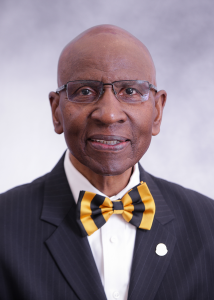
The National Black Church Initiative and the American Clinical Health Disparities Commission are backing efforts to expand research capacity at Howard University and other HBCUs as Howard nears an R1 designation. The move could unlock more funding and partnerships for research tied to Black health and other community priorities.
Why it matters: - Howard University’s expected R1 designation could help shift more research funding, faculty hiring and national attention toward HBCUs. - NBCI and ACHDC want that research growth to translate into stronger Black health outcomes and broader clinical trial participation. - The push also reflects a larger effort to counter decades of underinvestment in HBCU research infrastructure.
What happened: - The National Black Church Initiative said it supports efforts to expand research capacity across HBCUs after Howard University’s anticipated Research-1 designation. - NBCI and the American Clinical Health Disparities Commission have been discussing a possible clinical research partnership with Howard University. - The groups are also exploring ways to expand faith-based participation in clinical research through HBCUs and other institutions. - NBCI and ACHDC said they plan to engage students from member congregations who study science, health and related fields at HBCUs.
The details: - NBCI describes itself as a coalition of 150,000 African American and Latino faith communities with 27.7 million members. - NBCI’s Black Church Clinical Trials website and ACHDC run a national faith-based clinical trials engagement program. - Howard University is expected to become the first HBCU to receive an R1 designation under the updated Carnegie Classification framework, according to reporting by The Chronicle of Higher Education. - The Carnegie Classification system groups higher education institutions by research activity and degree offerings. - Under the revised model, an institution may qualify for R1 status if it awards at least 70 doctoral degrees in any field and spends at least $50 million on research in the prior academic year. - Howard conferred 91 doctoral degrees and spent more than $85 million on research in the last academic year, according to Bruce Jones, Howard’s senior vice president for research, as reported by The Chronicle. - Howard first received R1 status in 1987 and lost it in 2005 after Carnegie changed its requirements. - Howard’s R1 status may bring added focus to research on sickle-cell disease and voter participation, two areas that disproportionately affect Black communities. - Rev. Anthony Evans and Dr. Joseph Webster said the moment creates an opportunity for a faith-based and higher-education clinical research collaboration focused on improving Black health outcomes. - They also pointed to NBCI’s National Black Health Agenda, published two years ago, as a framework for clinical and community engagement priorities. - Earlier this year, the American Council for Education changed the ranking strategy to place less emphasis on the number of STEM doctoral degrees awarded each year. - Carnegie executive director Mushtaq Gunja said the older system excluded institutions that were unable to produce doctoral degrees across all those fields. - Howard will lead the University Affiliated Research Center, a $90 million consortium of HBCUs focused on tactical autonomy research for the U.S. Air Force.
Between the lines: - The revised R1 rules lower one of the biggest structural barriers that has limited HBCUs’ access to top research status. - That change could help a small group of HBCUs with growing research capacity move closer to the same national profile long enjoyed by predominantly white institutions. - The emphasis on faith-based outreach signals an effort to connect academic research with communities that have often been underrepresented in clinical studies. - The long history of funding gaps and program duplication cited by The Chronicle shows why research status alone will not erase inequities, but it can improve leverage.
What’s next: - Howard is expected to move through the updated classification process as Carnegie’s changes take hold. - NBCI and ACHDC plan to keep building partnerships with Howard and other HBCUs around research participation and community engagement. - Other HBCUs, including North Carolina A&T State University, Morgan State University and Southern University and A&M College, may pursue R1 status in coming years as they invest in research infrastructure, laboratories and academic programs. - Continued legal and policy fights over state funding could shape how quickly HBCUs can capitalize on the new rules.
The bottom line: - Howard’s expected R1 breakthrough could become a template for other HBCUs, but converting that status into lasting community impact will require sustained research investment and broader participation.
Disclaimer: This article was produced by AGP Wire with the assistance of artificial intelligence based on original source content and has been refined to improve clarity, structure, and readability. This content is provided on an “as is” basis. While care has been taken in its preparation, it may contain inaccuracies or omissions, and readers should consult the original source and independently verify key information where appropriate. This content is for informational purposes only and does not constitute legal, financial, investment, or other professional advice.
Sign up for:
University Research Times
The daily local news briefing you can trust. Every day. Subscribe now.
Check Your Email!
We sent a one-time activation link to: .
Confirm it's you by clicking the email link.
If the email is not in your inbox, check spam or try again.
Welcome back!
is already signed up. Check your inbox for updates.